Little Interview
Every month we ask the same set of cultural questions to one of our artistic, academic or civic collaborators.
Over the last number of years, we have interviewed diverse members of the Glucksman community - artists, academics, staff members, guests, audiences and workshop participants. The responses are funny, inspiring, revealing and always a great read.
This month, we hear from Geraldine O'Neill whose work is included in Panorama Europa at The Glucksman until November 1st. Geraldine O’Neill has long responded to the increasing confrontation with human engagement and relationship with the ecosystem, in particular the Anthropocene whose traces are now embedded within the geological layers of the Earth’s structure. She-makes what she calls “Slow Art” mostly painting but sometimes expanded paint, sculpture and print using traditional materials that is counter cultural to this fast paced disposable world that we now inhabit.
What are you reading?
I’m in the middle of re-reading two different books both of which are equally compelling. Peter Wohlleben’s The Hidden Life of Trees is quietly gripping and illuminating. He reveals that the trees are not solitary organisms but part of complex communicating and supporting one and other ways we rarely perceive. His writing encourages a slower more attentive way of looking reminding us what lies beneath the surface often carries the greatest significance.
The other book is Madame Lazare by Tadhg Ó Dhonnagáin which won the European Union literature prize in 2022. It’s a sweeping historical thriller that interweaves mystery memory and identity across Ireland, France and Belgium. The main protagonist Hana Lazar begins speaking fragments of an ancient unknown language as dementia loosens her grip on the present. The novel travels linguistically and culturally through space and time to her past community, family and circumstance, as her story and the mystery is gradually revealed. By focusing on the particular , Ó Dhonnagáin exposes a universality about the wish to belong, how life is like a pilgrimage through time and how really in the end we are all exiles from our past. The language is beautiful and the time shifts are effortless, moving between generations from her past to the present as a deep mystery and personal tragedy is revealed. The novel explores love, loss, exile and resilience, revealing how trauma shapes family history and how forgotten stories can transform our understanding of who we are.
Favourite museum?
The Branchi Chapel in Florence immediately pops into my mind I was there in the mid 90s. Foreign travel then was rare and exotic. Unbelievably, my memory of the visit was that I was in complete solitude entering into the chapel with its bright airy frescoes. In a way it is a Renaissance form of a graphic novel telling stories from the life of Saint Peter. The colour, the emotion and the extraordinary perspective an and unity of Frescoes. Each fresco with its own vanishing point and the symmetry of the vanishing points of the opposite scene matching perfectly. I’ve never been back. I don’t know if my memory of it would be diminished by a revisit.
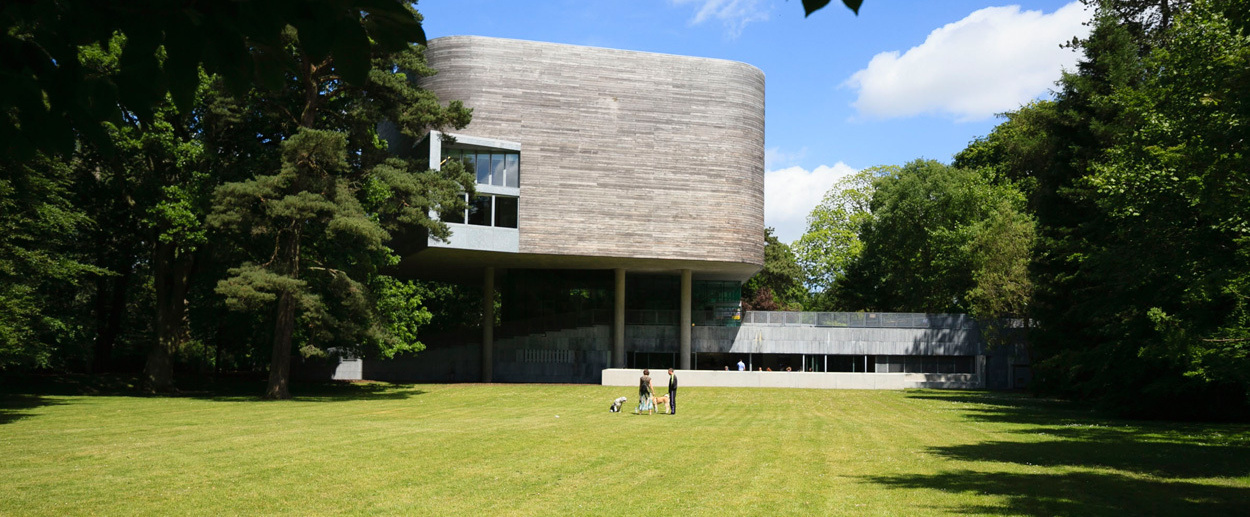
I have many favourite museums here in Ireland. We are very lucky. I used to love popping into the natural history Museum with its odd Victorian displays, animals perpetually frozen in motion and its cabinets of curiosities. I love The Model Sligo with its beautifully adapted 19 century school buildings. I’ve seen some great exhibitions there. It’s a place that fosters dialogue reflection and meaningful encounters with art all set against the extraordinary Sligo landscape. And I absolutely adore the beautiful Glucksman designed with such care by O’Donnell+Tuomey with its generous natural light and carefully choreographed galleries creating spaces that are both intimate and monumental. It sits in an extraordinary setting of an Arboretum of 2500 trees alongside the River Lee. It is a museum of contemporary art with ambitious programming alongside a deep commitment to Artists working in Ireland. The Glucksman always manages to feel both internationally ambitious and deeply rooted in its local community and it has become a cultural meeting place where contemporary art is presented as something essential to public life rather than something remote or exclusive. Magic!
Best performance?
I saw David Byrne perform recently and he was just fantastic despite the absolute lashings of rain. His sense of play, movement his choreography, visuality and fun were infectious but the performance that has lingered with me most since seeing it was Nuala Ní Dhomhmaill’s translation of the oldest play in Europe, na Peirsigh, at The Peacock, Hanratty’s direction elevated this whole production into something compelling. Told unusually from the perspective or the enemy, na Peirsigh/Persian explores the shared humanity of the attackers along with their fears, failings, grief and regret The musicality and powerful storytelling, the lighting the masterful use of candles the evocative simple stage set was brilliant. Naoise MacCathmhaoil’ s incredible depiction of the character of King Xerxes was delivered entirely through Sean nós singing, It was just such an immense performance. the audience breathed in rhythm with his despair and emotion. The chorus callings and keenings, their deep exhales and the phonetics of Nuala Ni Dhomhnaill’s Irish language translation reinforcing a sense of it all being as old as time and the universality of human grief and suffering, pointlessness of all conflicts. Powerful stuff.
Most treasured possession?
My children although I don’t possess them, they are themselves, free spirits but are essential to my being.
Work(s) of art that inspire you?
There are so many - from El Anatsui’s extraordinary work transforming millions of discarded bottle caps into monumental shimmering wall hangings of deep contemplation, his fluid like sculptures deeply engage with themes of colonial history, cultural memory and land reclamation.
I love Joachim Patinir’s panoramic jewel like landscapes with their vast imagined terrains where biblical stories are mere tiny incidents happening within nature. Velazquez’s work with his masterful optical illusions with paint are extraordinary. Marlene Dumas' fluid like depiction of human form are compelling. Evie Hone’s colourful but restrained compositions are joy, but it is the work of Daphne Wright that I return to most frequently and feel a deep affinity with. Her beautifully crafted sculptural installations explore vulnerability, care and impermanence. Her practice focuses on thresholds and transitional states examining the spaces. Between childhood and adulthood, life and death, presence and absence. Her work has a massive physical presence balanced by an extraordinary psychological gentleness suggesting that strength and tenderness are not opposites.
Daphne works effortlessly across materials including plaster, tinfoil, red gloss paint , unfired clay, sound and video. These fragile ephemeral media are used to explore vulnerability care and impermanence . Her craft matches her rigourous conceptual thinking. Although I love all her works, there are certain pieces of hers that I return to again and again. One of them is Primate. It is is a sculpture filled with pathos, its body and it’s delicate biology passed away, laid out as if attending its own wake. It is a counterpoint to the living ecology. It carries its responsibility uncertainty and inherited history with dignity and care. By making the death mask Daphne wright accessed the cycle of its life. Primate is crafted from marble dust , onyx, resin, paint and beautiful silk embroidery matching the contours of it’s anatomy. it simply occupies the space with immense dignity and vulnerability. The sculpture evokes empathy through careful observation rather than spectacle, suspended between life and death, strength and fragility . In a profound sense it looks back at us and reflects us and challenges the traditional hierarchy that places humans above all other creatures.
A lightbulb moment?
Realising that motherhood and making art are not mutually exclusive in fact the act of play in experimentation, making, building, imagination central to the development of a child is central to my artistic practice and nourishes it. Making is crucial and I am balbh, I cannot speak without the ability to make.
Guilty pleasure?
Daydreaming.
What would you like to be doing right now?
I would love to be with the family absorbing the euphoric joy in Mayo having won the Sam! Specifically though I would head to Old Head where there is a remnant of an ancient temperate rainforest reaching down to a sheltered beach. I would head to a specific ancient oak tree that is covered in moss and epiphytes. We used to hide sweets and treats there for the children. I would sit and breathe, space and time have a particular way of bending here. Pure magic!